
Calorie Deficit Calculator UK
Instantly calculate your daily calorie intake, fat loss timeline, and personalised plan — based on UK health guidelines.
New Free calorie deficit calculator UK — no sign-up, no guesswork. Trusted by thousands for sustainable weight loss.
What is a Calorie Deficit?
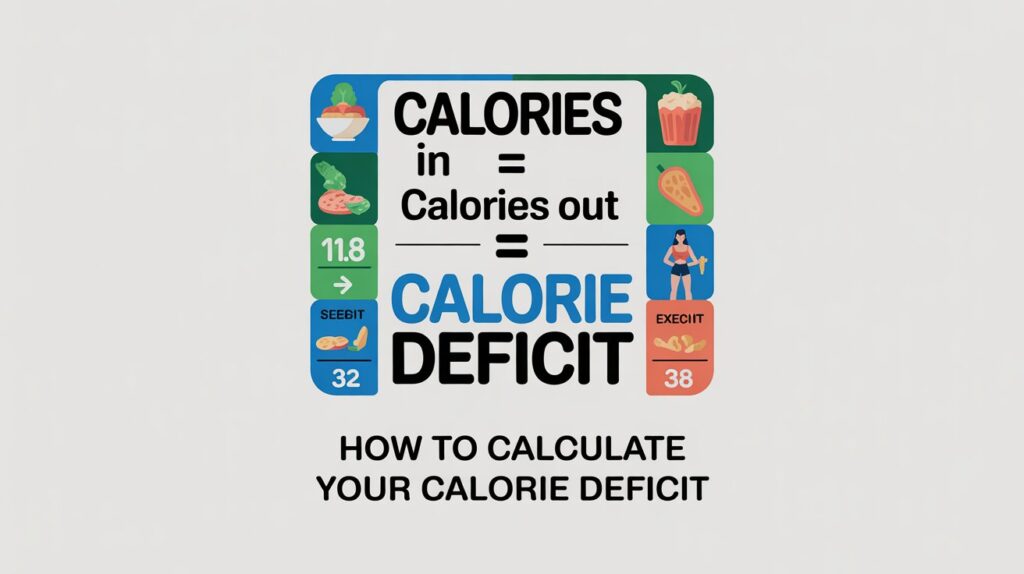
A calorie deficit is the cornerstone of weight loss. It occurs when you consistently consume fewer calories than your body expends over 24 hours. If your Total Daily Energy Expenditure (TDEE) is 2,200 kcal and you eat 1,700 kcal, you are in a 500‑calorie deficit. Your body compensates by tapping into stored fat reserves, leading to gradual, measurable fat loss.
Creating a deficit does not mean starving yourself. The most effective approach is a modest, sustainable reduction of 300–750 kcal per day, combined with a balanced diet and, where possible, increased physical activity. Consistency beats extremism every time.
| Concept | What it means |
|---|---|
| 1 kg of fat = 7,700 kcal | You must create a cumulative deficit of 7,700 kcal to lose 1 kg of pure body fat. |
| 500 kcal daily deficit | Leads to approximately 0.5 kg weight loss per week. |
| Safe deficit range | 300–750 kcal per day depending on your body size, age, and activity level. |

How to Calculate Your Calorie Deficit (BMR & TDEE)
To create a precise deficit, you need to know your Basal Metabolic Rate (BMR) and Total Daily Energy Expenditure (TDEE). Our calorie deficit calculator UK handles the math automatically, but understanding the underlying equations empowers you to make informed decisions.
Step 1: Find Your BMR
Your BMR is the number of calories your body burns at complete rest, powering vital functions like breathing, circulation, and cell repair. The most accurate predictive equation is the Mifflin‑St Jeor formula:
- For men: BMR = (10 × weight in kg) + (6.25 × height in cm) – (5 × age in years) + 5
- For women: BMR = (10 × weight in kg) + (6.25 × height in cm) – (5 × age in years) – 161
Step 2: Calculate Your TDEE
Your TDEE is your BMR multiplied by an activity factor that reflects your daily movement:
- Sedentary (little or no exercise): BMR × 1.2
- Lightly active (light exercise/sports 1–3 days/week): BMR × 1.375
- Moderately active (moderate exercise 3–5 days/week): BMR × 1.55
- Very active (hard exercise 6–7 days/week): BMR × 1.725
- Super active (very hard exercise & physical job): BMR × 1.9
Step 3: Set Your Deficit
Once you have your TDEE, subtract a safe deficit. The NHS and British Dietetic Association recommend a daily deficit of 300–700 kcal for most people. This typically yields a steady weight loss of 0.25–0.75 kg per week. Never drop below 1,200 kcal (women) or 1,500 kcal (men) without medical supervision.
How Many Calories Should You Eat to Lose Weight in the UK?
While every body is unique, the following average ranges offer a useful starting point for UK adults aiming to lose weight. These figures assume a moderate activity level and a deficit of ~500 kcal per day.
| Category | Maintenance Calories | Weight Loss Calories |
|---|---|---|
| Women (average) | 1,800 – 2,200 kcal | 1,200 – 1,700 kcal |
| Men (average) | 2,200 – 2,800 kcal | 1,500 – 2,300 kcal |
Example: A moderately active woman in the UK with a maintenance of 2,000 kcal can reduce her intake to ~1,500 kcal per day (500 kcal deficit). This consistent approach will result in roughly 0.5 kg weight loss per week.
What Is a Safe Calorie Intake? (NHS Guidelines)
According to the NHS and UK health authorities, women should not routinely consume fewer than 1,200 kcal per day, and men should not go below 1,500 kcal per day without professional oversight. Consuming too few calories can trigger metabolic slowdown, nutrient deficiencies, fatigue, and loss of lean muscle mass — making long‑term weight maintenance much harder.
Our calorie calculator NHS UK aligns perfectly with these safe parameters, ensuring your personalised plan is both effective and health‑conscious.




⚙️ How Our Calorie Calculator Works
(Mifflin‑St Jeor or Katch‑McArdle if body fat % given)
(Women < 1,200 · Men < 1,500)
Our best calorie deficit calculator UK combines the Mifflin‑St Jeor BMR equation with custom activity multipliers to deliver a comprehensive weight loss blueprint. You can use metric (kg/cm) or imperial (lbs/ft) units, set a target duration, and even input optional body fat percentage for enhanced accuracy.
📥 What you enter
- Gender
- Age (years)
- Weight (kg or lbs)
- Height (cm or ft/in)
- Activity level (5 options)
- Goal weight & duration (weeks)
- Optional body fat %
📤 What you get
- BMR (calories at rest)
- TDEE (daily total burn)
- BMI category (underweight–obese)
- Personalised daily calorie target
- Total deficit required & daily deficit
- Weekly fat loss projection
- Macronutrient split (Protein/Carbs/Fats)
- Downloadable PDF report
| Metric | Value |
|---|---|
| Gender | Female |
| Age | 30 |
| Current weight | 70 kg |
| Goal weight | 60 kg |
| Height | 165 cm |
| Activity level | Lightly active |
| Goal duration | 12 weeks |
| BMR | 1,430 kcal/day |
| TDEE | 1,890 kcal/day |
| Recommended intake | 1,390 kcal/day |
| Daily deficit | 500 kcal/day |
| Projected fat loss | 10 kg over 12 weeks |
Macronutrient Breakdown for Sustainable Weight Loss
Beyond total calories, the quality and distribution of your intake matter profoundly. Our weight loss calorie deficit calculator provides a tailored macronutrient split to preserve muscle, manage hunger, and sustain energy levels.
| Macronutrient | Recommended % | Grams per day (approx.) |
|---|---|---|
| Protein | 25 – 30% | 90 – 120 g |
| Carbohydrates | 40 – 50% | 150 – 200 g |
| Fats | 20 – 25% | 50 – 70 g |
Practical Nutrition Tips for a Deficit
- Prioritise protein – high-protein meals (lean meats, fish, tofu, legumes) boost satiety and protect lean mass.
- Stay hydrated – aim for 2–3 litres of water daily; thirst is often mistaken for hunger.
- Choose fibre‑rich foods – vegetables, whole grains, and fruits add volume without excess calories.
- Include healthy fats – olive oil, avocados, nuts, and seeds support hormonal health and flavour.
- Track consistently – use a food diary or app for at least the first few weeks to build awareness.
- Don’t skip meals – spread your intake across 3–4 balanced meals to avoid extreme hunger later.
Weekly Fat Loss Projections & UK Resources
Our TDEE calorie deficit calculator provides a week‑by‑week breakdown of your expected weight loss, complete with a visual line chart and data table. You can download the full PDF report to track your progress offline.
Trusted UK‑Based Resources
- NHS Live Well – Healthy Weight: Evidence‑based advice on safe weight loss and lifestyle changes.
- British Dietetic Association (BDA): Expert guidance from registered dietitians on managing weight through nutrition.
- British Nutrition Foundation: Reliable, science‑backed information on achieving and maintaining a healthy weight.
Using a calorie deficit calculator for weight loss is a powerful first step, but always complement it with a balanced, whole‑food diet and consult a healthcare professional for personalised medical advice.
⚡ Try a Quick Estimate
Click the button below to see a sample daily calorie target based on average UK stats.
*This is a demo. For an exact plan, use the full calculator above.
Frequently Asked Questions (FAQ)
Your ideal intake depends on your age, weight, height, activity level, and goal timeline. Our calorie deficit calculator free generates a precise number for you. As a rule of thumb, a 500‑kcal deficit from your TDEE yields ~0.5 kg loss per week.
UK guidelines recommend a daily deficit of 300–750 kcal for safe, sustainable weight loss. This range minimises muscle loss and nutritional deficiencies while producing steady results.
While we are not the NHS, our calculations strictly follow the NHS and BDA guidelines for safe calorie minimums (1,200 for women, 1,500 for men) and sustainable deficit ranges. We align with UK health standards.
Absolutely. The calorie deficit calculator UK provides a daily calorie target that works regardless of meal timing or dietary style (keto, low‑carb, IF, etc.). The macro split can also be adjusted to suit your preferred eating pattern.
No. For some smaller, sedentary women, 1,200 kcal may be adequate, but it is not suitable for men, active individuals, or larger bodies. Our free calorie deficit calculator UK ensures your target is personalised, not a one‑size‑fits‑all number.
An excessively large deficit (e.g., >1,000 kcal) can lead to rapid muscle loss, metabolic adaptation, fatigue, and nutritional gaps. It often results in yo‑yo dieting. A moderate, consistent deficit is far more effective for long‑term success.
No, you can achieve a deficit through diet alone. However, combining a moderate deficit with physical activity (even daily walking) enhances fat loss, preserves muscle, and supports cardiovascular health.
If you are taking Mounjaro (tirzepatide) or similar medications, your appetite and metabolic response may change. Our mounjaro calorie deficit calculator (integrated into this tool) allows you to input your current medication status to adjust recommendations appropriately — always consult your prescriber.
While we share the same evidence‑based principles (like the 7,700‑kcal rule), our james smith calorie deficit calculator‑style approach is fully UK‑aligned, offers PDF reports, and includes optional body fat % for enhanced precision. We focus on sustainability over rapid fixes.
With a consistent daily deficit of 500 kcal, most people lose approximately 0.5 kg (1 lb) per week. Over 12 weeks, that equates to about 6 kg (13 lbs) of fat loss — a safe, transformative change.
Generic apps often use oversimplified averages. Our tool factors in your specific age, gender, height, weight, activity, goal duration, and optional body fat % to deliver a truly personalised plan that respects NHS safety guidelines.